The African Story Is Part of the World Story
Africa is often described through the lens of its challenges, but the continent’s contribution to world history is far broader and deeper.
Africa has been a center of human development, civilization, knowledge, trade, creativity, innovation, political thought, and cultural exchange for thousands of years. From ancient civilizations along the Nile to powerful West African empires, from African intellectual traditions to the global influence of the African diaspora, Africa has played a fundamental role in shaping the world we live in today.
Understanding these contributions is not about exaggerating Africa’s achievements or rewriting history. It is about recognising that African history is world history.
Africa and the Origins of Humanity
Africa occupies a unique place in the story of humanity.
The earliest evidence of human evolution comes from the African continent, particularly regions of East and Southern Africa. Fossil discoveries and archaeological research have provided important evidence for understanding the development and movement of early humans.
This makes Africa essential to the story of where humanity came from and how human societies developed.
Before discussing African kingdoms, empires, inventions, or modern achievements, it is important to recognise this fundamental connection:
Africa is deeply connected to the earliest chapters of the human story.
Ancient African Civilisations
Africa has been home to some of the world’s most influential ancient civilisations.
Ancient Egypt
Ancient Egypt developed one of the world’s most recognisable civilisations, leaving a legacy in architecture, mathematics, writing, medicine, agriculture, administration, engineering, and art.
The pyramids and monumental structures demonstrate remarkable organisational and engineering capabilities, while ancient Egyptian writing and administrative systems provide valuable evidence of complex society.
Nubia and Kush
To the south of Egypt, the civilisations of Nubia and Kush developed powerful states and extensive trade networks.
The Kingdom of Kush became a major regional power and, during the 8th century BCE, Kushite rulers governed Egypt as the 25th Dynasty.
The history of Kush demonstrates the importance of the Nile Valley as a region of cultural, political, and economic exchange.
African Contributions to Knowledge
African societies developed and preserved important bodies of knowledge across generations.
Mathematical, astronomical, agricultural, architectural, medical, and environmental knowledge developed in different regions of the continent.
African traditional knowledge systems also contained sophisticated understandings of plants, ecosystems, food production, construction, and community organisation.
Knowledge was transmitted through written texts in some societies and through oral traditions, apprenticeships, institutions, and community practices in others.
This diversity reminds us that knowledge does not develop through a single pathway.
African Scholarship and Centres of Learning
West Africa became home to important centres of intellectual and religious scholarship.
Cities such as Timbuktu, Djenné, and Gao became connected to extensive networks of trade and learning.
Timbuktu in particular became internationally recognised as a centre of scholarship, with scholars studying subjects including Islamic law, theology, literature, mathematics, astronomy, and history.
The surviving manuscripts associated with Timbuktu provide evidence of a rich intellectual tradition in West Africa.
These traditions form an important part of the wider history of African scholarship.
African Contributions to Global Trade
Africa has long been connected to international economic networks.
Gold, salt, ivory, textiles, agricultural products, metals, and other commodities moved through regional and long-distance trade routes.
The Ghana, Mali, and Songhai Empires became major powers partly because of their position within trans-Saharan commercial networks.
The Mali Empire became particularly famous for its wealth and international connections during the reign of Mansa Musa.
His pilgrimage to Mecca in the 14th century demonstrated the scale of Mali’s connections with the wider Islamic world and helped bring attention to West Africa across regions connected by trade and scholarship.
African Architecture and Engineering
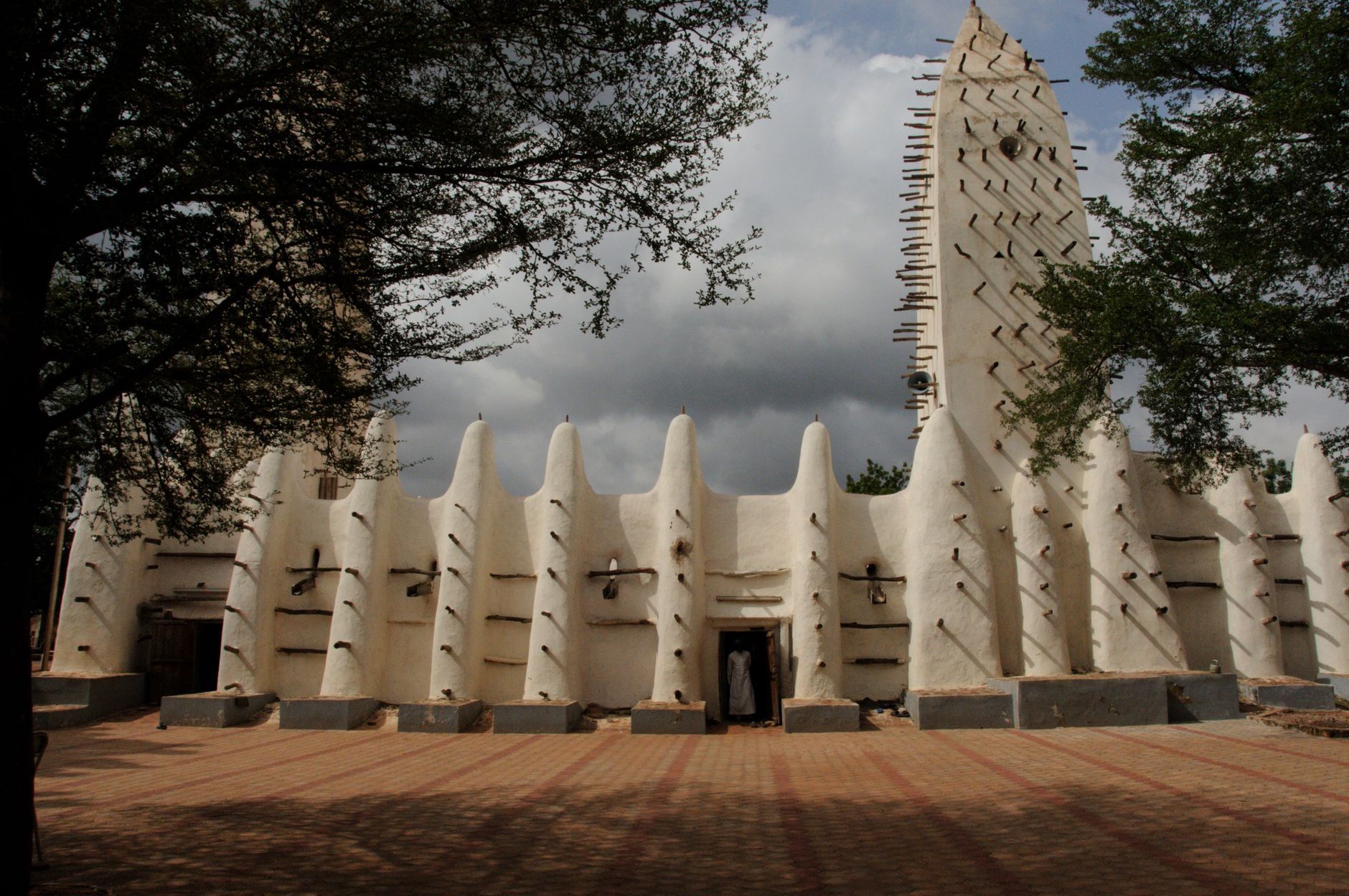
Africa’s architectural heritage demonstrates extraordinary creativity and technical skill.
The monumental structures of ancient Egypt are perhaps the most famous examples, but they are far from the only ones.
Great Zimbabwe provides another remarkable example.
Its enormous stone structures demonstrate advanced construction techniques and reflect the economic and political importance of the region.
Across Africa, communities developed distinctive architectural traditions adapted to their environments, resources, climates, and social needs.
African architecture is therefore not a single tradition but a collection of diverse approaches developed over thousands of years.
African Metallurgy and Craftsmanship
Metalworking played an important role in many African societies.
Ironworking developed independently in parts of Africa and became important for agriculture, tools, construction, warfare, and economic development.
African craftspeople also developed highly sophisticated traditions in:
- Metalworking
- Pottery
- Textiles
- Wood carving
- Jewellery
- Sculpture
- Beadwork
- Leatherworking
The Benin Bronzes, for example, demonstrate extraordinary artistic and technical skill and have become internationally significant objects in discussions about African art, colonialism, cultural heritage, and restitution.
African Contributions to Agriculture and Food
African agricultural knowledge has influenced food systems around the world.
The continent is home to a remarkable diversity of crops and agricultural traditions.
Crops associated with Africa, including sorghum, millet, coffee, and several indigenous food plants, have played important roles in regional and global food systems.
African farmers also developed agricultural practices adapted to diverse environments ranging from deserts and savannahs to forests and highlands.
Traditional agricultural knowledge continues to provide valuable lessons about biodiversity, sustainability, and resilience.
African Culture and the Global World
Perhaps one of Africa’s most visible contributions to world history is cultural.
African music, rhythms, storytelling, dance, visual art, fashion, language, and spirituality have influenced cultures across the globe.
The African diaspora has played a particularly significant role.
Through the forced migration of millions of Africans during the transatlantic slave trade, African cultural traditions travelled to the Caribbean, North America, South America, and other parts of the world.
Despite brutal attempts to suppress African identity and culture, communities preserved and transformed elements of African traditions.
These influences can be seen in musical genres, religious traditions, food, language, dance, art, and cultural practices across the African diaspora.
African Contributions to the Modern World
Africa’s contributions did not end with ancient history.
African scientists, entrepreneurs, writers, artists, engineers, academics, athletes, activists, political leaders, and innovators continue to contribute to global society.
Modern African innovation can be seen in areas including:
Fintech and mobile payments
African innovators have developed new approaches to financial inclusion and digital payments.
Healthcare
African researchers and healthcare professionals contribute to public health, medical research, disease prevention, and community healthcare.
Technology
Technology entrepreneurs across the continent are developing solutions in education, finance, agriculture, logistics, healthcare, and communications.
Creative industries
African music, film, fashion, literature, and visual arts have developed increasingly global audiences.
Entrepreneurship
African entrepreneurs are creating businesses that address local challenges while increasingly competing in international markets.
Africa and the Global African Diaspora
Africa’s influence extends far beyond the continent.
The global African diaspora has made significant contributions to politics, science, literature, music, art, sport, business, education, and social movements.
Figures such as Frederick Douglass, W.E.B. Du Bois, Maya Angelou, James Baldwin, Chinua Achebe, Wangari Maathai, Nelson Mandela, and many others represent different aspects of a much larger global African story.
The relationship between Africa and its diaspora is complex and shaped by migration, colonialism, slavery, resistance, identity, culture, and economic exchange.
Understanding this connection is essential to understanding Africa’s place in world history.
The Importance of Telling the Full Story
For generations, African history has often been taught through incomplete or externally dominated narratives.
This has sometimes created the impression that Africa’s major historical significance began with European exploration and colonialism.
The historical record tells a much more complex story.
Africa has been home to ancient civilisations, powerful kingdoms, major trading networks, intellectual centres, innovative societies, and influential cultural traditions.
At the same time, Africa’s history includes colonialism, slavery, conflict, exploitation, resistance, and political transformation.
A complete understanding requires acknowledging all of these dimensions.
The goal is not to replace one incomplete narrative with another.
It is to develop a fuller and more accurate understanding of Africa’s place in human history.
Why This History Matters Today
Learning about African contributions to world history is not simply an academic exercise.
History influences identity.
When people understand the achievements and experiences of those who came before them, they gain a stronger foundation from which to think about the present and future.
For young Africans and members of the global African diaspora, learning this history can encourage:
- Greater cultural confidence
- Historical awareness
- Critical thinking
- Global perspective
- Innovation
- Leadership
- A stronger connection to heritage
Knowledge of the past can become a foundation for future development.
Empowering the African Mind
At Cultural Education, we believe that cultural and historical education can play an important role in empowering individuals and communities.
Our vision is to equip and empower the African mind globally by making African history, culture, knowledge, and opportunities more accessible.
African contributions to world history should not be viewed as a footnote.
They are part of the story of humanity itself.
From ancient civilisations and intellectual traditions to modern innovation and global culture, Africa has helped shape the world in countless ways.
The responsibility of today’s generation is to learn these stories, preserve them, share them, question incomplete narratives, and build upon the knowledge and achievements of those who came before.
Africa’s Story Is Our Shared History
Africa is not outside world history.
Africa is not a side story.
Africa is part of the foundation of the human story.
And the more we learn, the more clearly we can understand the past — and the more confidently we can shape the future.
Learn. Discover. Understand. Empower.

