Africa is home to thousands of ethnic groups, languages, communities, and cultural traditions. From the deserts of North Africa to the savannas of East Africa, the forests of Central Africa, the coastlines of West Africa, and the diverse societies of Southern Africa, the continent is one of the world’s richest sources of cultural diversity.
African culture cannot be described as one single culture. It is a vast collection of identities, traditions, languages, beliefs, values, artistic expressions, and ways of life that have developed over generations.
At the heart of many African cultures is a powerful idea: heritage connects generations.
Traditions and customs provide communities with ways to preserve knowledge, celebrate important moments, strengthen relationships, and pass values from one generation to the next.
What Are African Traditions and Customs?
Traditions are practices, beliefs, knowledge, or ways of life that are passed from one generation to another.
Customs are behaviours and practices that have become established within a particular community or society.
Across Africa, these may include:
- Naming ceremonies
- Marriage traditions
- Coming-of-age ceremonies
- Funeral and remembrance practices
- Storytelling
- Traditional music and dance
- Clothing and adornment
- Food and cooking traditions
- Community celebrations
- Religious and spiritual practices
- Respect for elders
- Traditional forms of leadership
- Craftsmanship and artistic traditions
These practices differ considerably from one community to another.
Understanding this diversity is important because there is no single definition of what it means to be African.
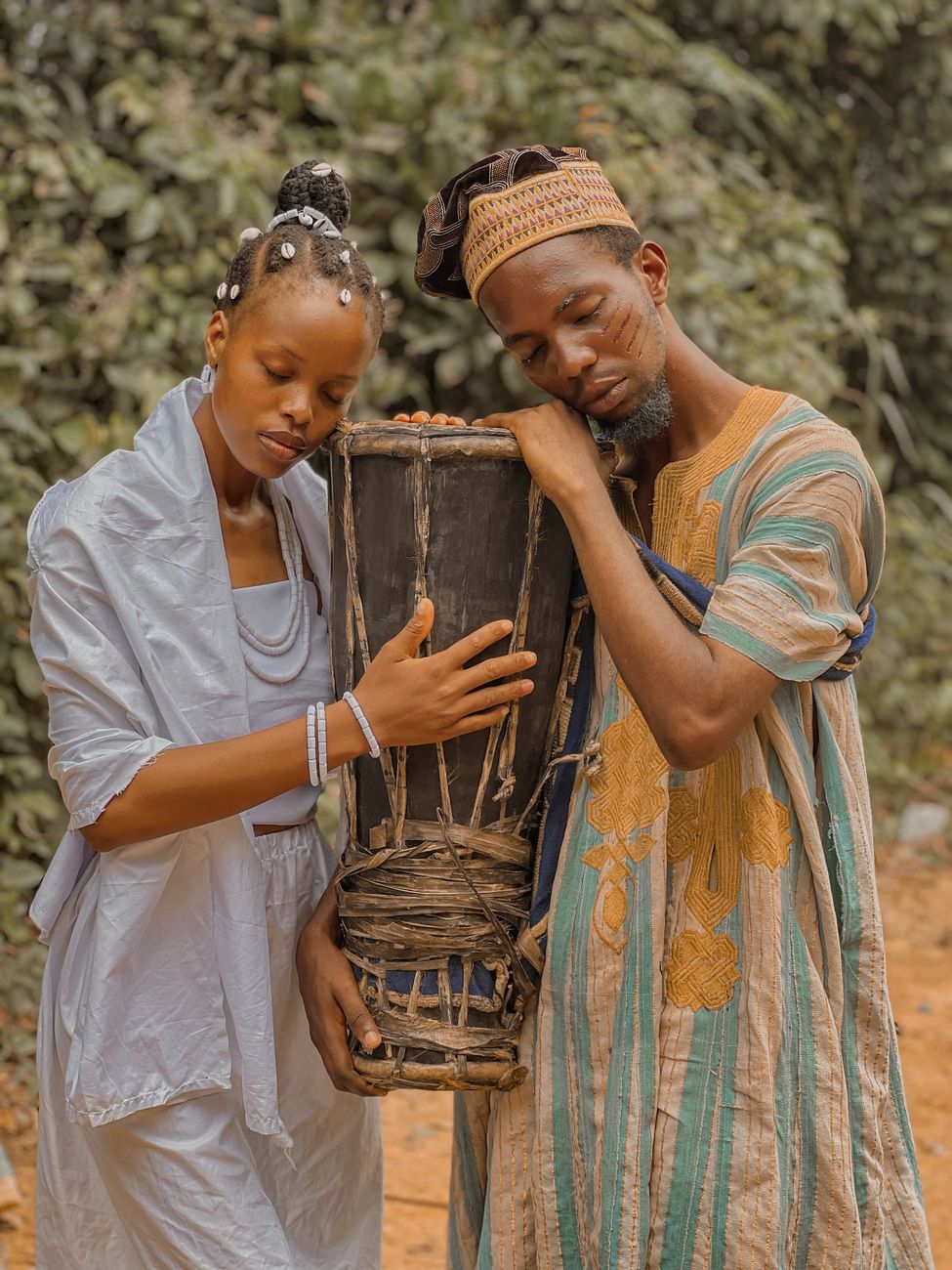
The Importance of Community
Community is an important feature of many African societies.
Historically, individuals often lived within extended family and community networks where responsibilities and knowledge were shared.
Neighbours, relatives, elders, and community leaders could play important roles in raising children, resolving disputes, organising ceremonies, supporting families, and preserving cultural knowledge.
This emphasis on community is reflected in philosophies such as Ubuntu, often associated particularly with Southern African societies.
Although Ubuntu has different interpretations and cannot represent every African culture, it is commonly associated with ideas of humanity, interconnectedness, dignity, and mutual responsibility.
The broader lesson is that identity can be understood not only through individuality, but also through relationships with family and community.
Respect for Elders and Ancestral Knowledge
In many African communities, elders have traditionally played an important role as custodians of knowledge.
They may preserve oral histories, family histories, traditional practices, stories, proverbs, songs, genealogies, and knowledge about the environment.
Respect for elders has therefore often been connected to respect for knowledge and experience.
This does not mean that every African society has the same approach to age or authority. African cultures are diverse, and relationships between generations vary.
However, intergenerational knowledge remains an important part of many African cultural traditions.
The Power of Storytelling
Before written records became widespread in many African societies, knowledge was often transmitted orally.
Storytelling became an important way of teaching younger generations about:
- History
- Morality
- Family
- Leadership
- Community responsibilities
- Relationships
- Nature
- Identity
Stories could entertain while also teaching valuable lessons.
In West Africa, for example, griots and other hereditary or professional oral historians have played important roles in preserving histories, genealogies, music, and traditions in particular societies.
Storytelling remains relevant today.
Modern African writers, filmmakers, musicians, educators, podcasters, and digital creators continue the tradition of telling African stories — using new technologies to reach global audiences.
Naming and Identity
Names can carry deep cultural meaning.
Across Africa, names may reflect circumstances surrounding a child’s birth, family history, religious beliefs, aspirations, events, relationships, or cultural traditions.
In some societies, naming ceremonies are important occasions involving family and community members.
A name can therefore represent more than an individual’s identity. It can connect a person to family, ancestry, community, history, and cultural heritage.
For many people in the African diaspora, reconnecting with African names and naming traditions can also become part of exploring cultural identity.
Marriage Traditions
Marriage traditions vary enormously across Africa.
Different communities have their own approaches to courtship, engagement, marriage ceremonies, family involvement, clothing, music, food, gifts, and celebrations.
In many traditional settings, marriage has historically been viewed not only as a relationship between two individuals but also as a relationship connecting families and communities.
Practices such as bridewealth or bride-service have existed in various forms among different societies.
However, these customs should always be understood within their specific cultural and historical contexts rather than being treated as universal African practices.
Coming-of-Age Traditions
Many societies have developed traditions marking the transition from childhood to adulthood.
These may involve education, mentorship, ceremonies, community recognition, spiritual practices, responsibilities, or periods of preparation.
The purpose can include teaching young people about their responsibilities, values, history, relationships, and role within society.
Today, some traditional coming-of-age practices continue, while others have changed significantly or disappeared.
The underlying principle remains relevant: communities need ways to prepare younger generations for adulthood and responsibility.
Food as Cultural Heritage
Food is one of the most powerful expressions of culture.
African cuisines reflect the continent’s enormous environmental and cultural diversity.
From West African jollof rice and groundnut-based dishes to Ethiopian injera, North African couscous, East African ugali, Southern African pap, and countless regional specialities, food connects people to geography, history, agriculture, migration, and family.
Traditional cooking methods and recipes are often passed from generation to generation.
Food can also tell stories about trade and cultural exchange.
Ingredients such as spices, grains, vegetables, fruits, and cooking techniques have travelled across regions and continents, creating new culinary traditions.
African food today is increasingly recognised globally, with African chefs and food entrepreneurs introducing traditional and contemporary African cuisine to international audiences.
Music and Dance
Music and dance are deeply connected to cultural expression across Africa.
Different communities have developed distinctive musical instruments, rhythms, vocal traditions, dances, and performance styles.
Music can accompany:
- Weddings
- Birth celebrations
- Religious ceremonies
- Funerals
- Festivals
- Community gatherings
- Political events
- Storytelling
African musical traditions have also had enormous global influence.
Across the African diaspora, African rhythms and musical traditions contributed to the development of genres including blues, jazz, gospel, reggae, hip-hop, and many other forms of contemporary music.
Modern African artists continue to expand this global influence through Afrobeats, Amapiano, African hip-hop, gospel, highlife, and countless other musical traditions.
Clothing and Adornment
African clothing is another important expression of identity.
Textiles, colours, patterns, jewellery, hairstyles, and forms of adornment can communicate information about community, age, status, religion, occupation, celebration, or personal identity.
Africa’s textile traditions are incredibly diverse, including fabrics and techniques such as kente, bogolanfini, indigo dyeing, woven textiles, embroidery, beadwork, and many others.
Modern African designers are combining traditional influences with contemporary fashion, creating brands that increasingly reach international markets.
Festivals and Celebrations
Festivals provide opportunities for communities to celebrate culture, history, religion, harvests, music, identity, and important social events.
They can bring together generations and strengthen community relationships.
Festivals also provide opportunities for younger generations to learn about traditional music, dance, clothing, food, storytelling, crafts, and history.
In today’s world, cultural festivals can also contribute to tourism, entrepreneurship, creative industries, and local economic development.
African Languages
Language is one of the most important elements of cultural identity.
Africa is home to thousands of languages, including major languages such as Swahili, Hausa, Yoruba, Igbo, Amharic, Arabic, Zulu, Xhosa, Somali, Wolof, and many others.
Language carries history, humour, values, knowledge, philosophy, and cultural memory.
When a language disappears, communities can lose access to unique ways of understanding the world.
Preserving African languages is therefore an important part of cultural preservation.
At the same time, many Africans are multilingual and navigate several cultural and linguistic identities.
This multilingualism is itself an important part of Africa’s cultural richness.
Cultural Identity in a Changing World
African cultures are not frozen in the past.
They change.
Migration, urbanisation, technology, education, religion, globalisation, intermarriage, economic development, and social media all influence how people express their identities.
Young Africans may combine traditional practices with contemporary lifestyles.
An individual might speak an African language at home, use English or French at work, listen to global music, wear contemporary fashion, participate in traditional ceremonies, and maintain connections with communities across several countries.
This does not necessarily mean that culture is being lost.
It can also mean that culture is evolving.
Preserving African Heritage
Cultural preservation is increasingly important in a rapidly changing world.
Communities, educators, families, museums, researchers, cultural organisations, and digital platforms all have roles to play.
Preservation can include:
- Recording oral histories
- Teaching African languages
- Documenting traditional music
- Preserving historical sites
- Supporting traditional crafts
- Digitising cultural archives
- Teaching young people about heritage
- Supporting cultural festivals
- Publishing African histories and literature
- Encouraging intergenerational knowledge sharing
Technology provides new opportunities to preserve and share cultural knowledge with audiences around the world.
Culture as an Economic Opportunity
Culture is not only about heritage.
It can also contribute to economic development.
African fashion, music, film, food, tourism, art, publishing, crafts, design, and digital content are part of growing creative industries.
Entrepreneurs can build businesses around cultural products and experiences while creating employment and helping communities preserve their heritage.
The challenge is to ensure that cultural commercialisation is approached ethically, with respect for communities, creators, intellectual property, and cultural ownership.
Building Cultural Confidence
Learning about African traditions and customs can help strengthen cultural confidence.
For Africans and members of the global African diaspora, understanding heritage can provide a stronger sense of connection to family, community, and history.
For people from outside Africa, cultural education can encourage greater understanding and appreciation while challenging stereotypes and misconceptions.
The goal is not to claim that one culture is better than another.
The goal is to understand, respect, learn, and connect.
Empowering the Next Generation
Young people are the future custodians of cultural heritage.
They will decide which traditions are preserved, which are adapted, and which new cultural expressions emerge.
That responsibility requires education.
When young Africans understand their histories, languages, traditions, and cultural achievements, they are better positioned to engage confidently with the wider world.
Cultural knowledge can coexist with innovation.
Tradition can coexist with technology.
Heritage can coexist with entrepreneurship.
Identity can coexist with global citizenship.
Our Vision
At African Global Minds Academy, we believe that cultural learning is an essential part of personal and collective development.
Our vision is to equip and empower the African mind globally by creating greater access to African history, culture, knowledge, and opportunities for learning.
We believe that understanding where we come from can help us make better decisions about where we are going.
African traditions and customs are not simply practices from the past.
They are living expressions of identity, community, knowledge, creativity, and heritage.
By learning, preserving, and sharing them, we help ensure that future generations can understand their roots while confidently creating their own future.
Learn. Preserve. Celebrate. Empower.
African Global Minds Academy— Empowering Minds Through Cultural Learning.

